Winky D Is Having An Honest Conversation About The Motherland On ‘Tête-à-Tête (Hello Africa)’
across ‘Tête-à-Tête (Hello Africa),’ Winky D draws a throughline through how the littlest choices goes further than our wildest imaginations.

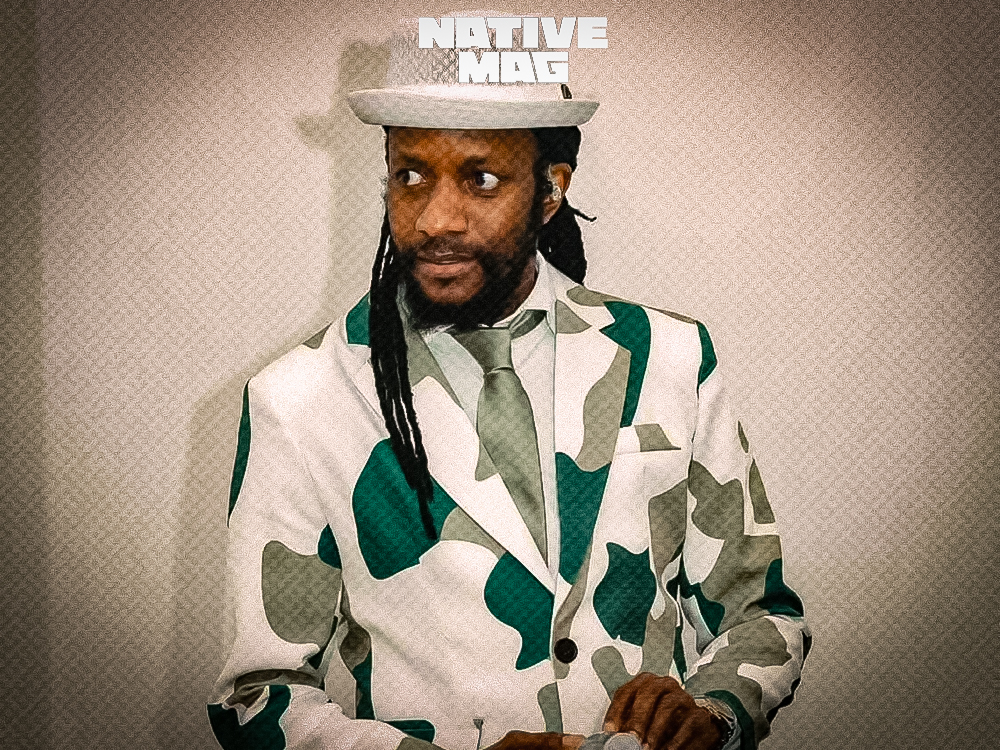
across ‘Tête-à-Tête (Hello Africa),’ Winky D draws a throughline through how the littlest choices goes further than our wildest imaginations.
Three decades into a career that has seen him earn plaudits and critical acclaim, Zimbabwean singer Winky D is still as resolute as he was at the beginning of his career. In August 2026, he released his latest album, ‘Tête-à-Tête (Hello Africa),’ a charged statement on the state of Africa and its children. From political apathy to institutional corruption and wastage, no topic quite escapes the Reggae singer’s gaze. “I wanted an intimate, honest conversation with Africa, with one another and with ourselves,” he explains. “ The project explores how public decisions enter private lives, how leadership affects a household, how unequal opportunity shapes someone’s future, and how survival pressures influence relationships and conscience.”
At turns across ‘Tête-à-Tête (Hello Africa),’ Winky D draws a throughline through how the littlest choices have a butterfly effect that goes further than our wildest imaginations. Framed this way, he beckons us toward a better direction on songs like “FREEDOM,” “GREEDY,” and “LEADERSHIP.” For all its political stance, Tête-à-Tête (Hello Africa)’ does not lose touch with its musicality, incorporating Soul and Afropop into its Reggae core for a project that proves that the Big Man can place cogent lessons and grabbing melodies side by side.
This conversation has been edited for clarity.
What still inspires you this deep into your career?
Life continues to ask new questions. Each generation encounters a different world, yet familiar desires endure, that are opportunity, dignity and belonging. That relationship between what changes and what remains keeps me curious. I remain inspired by the people who first gave my music meaning: the grandmother sustaining a household after the parents succumbed to a pandemic, the graduate seeking an opportunity, and those who preserve humour and generosity through hardship. Their grief, perseverance, and victories deserve to be heard.
Experience has also taught me to value quiet reflection and to keep learning rather than assume I have seen everything. People give my music a place in their lives. I feel responsible for listening closely enough to remain worthy of that trust.
What were you hoping to achieve with ‘Tête-à-Tête’?
I wanted an intimate, honest conversation with Africa, with one another and with ourselves. ‘Hello Africa’ extends that conversation across the continent while remaining grounded in the Zimbabwean experiences that shaped my voice. The project explores how public decisions enter private lives, how leadership affects a household, how unequal opportunity shapes someone’s future, and how survival pressures influence relationships and conscience. Freedom and patriotism therefore sit alongside love, greed, emotional wounds, culture and hope. I wanted listeners to find enjoyment and recognition while reconsidering familiar assumptions. We can honour our history, acknowledge external injustices and examine decisions made in our own name. Imagining a better Africa requires that honesty, including reflection on our own choices.
How did you approach making this project?
I began by listening to the stories and questions the music needed to carry. Each subject required its own emotional space, which was sometimes urgency, sometimes tenderness or restraint. Reggae and dancehall remain my foundation, while the message guides the instruments, melodies, and rhythms. I approached the album as a connected conversation, moving from rules, patriotism and freedom through everyday pressures and emotional experiences, before returning to culture, leadership and hope. These experiences coexist in people’s lives, and the music needed to reflect that. Rocky Dawuni, Raybekah and Patoranking broaden the conversation through distinct African perspectives. Throughout, I wanted to acknowledge difficult realities while giving equal attention to people’s joy, imagination, and humanity.
Africa is at the centre of ‘Tête-à-Tête.’ What are your thoughts on Pan-Africanism?
Pan-Africanism begins with recognising that another African’s dignity concerns you. Ubuntu gives that responsibility everyday meaning: how we treat each other, respect unfamiliar languages, and create opportunities for people who have been excluded. Pan-Africanism is a responsibility towards one another, grounded in the recognition of our shared humanity. Our histories connect us, but those connections must find expression in how we live today. Our shared history calls for solidarity and honest self-examination. Colonialism and unequal global relationships have lasting consequences, while our own decisions carry responsibilities. We must challenge corruption and exclusion, build accountable institutions, and ensure that independence translates into meaningful opportunity. Artists can contribute by bringing languages and experiences into conversation, building fair partnerships and opening doors for younger creators. Pan-Africanism becomes credible when Africans can travel, create, earn, question, and belong with greater freedom. Its promise must be felt in ordinary lives.
What do you hope the legacy of this project will be?
I hope it preserves something truthful about our time, particularly what people endured, celebrated, questioned, and continued to hope for. Future listeners should be able to recognise the humanity within these songs beyond the circumstances of their release. I also hope it encourages younger artists to trust their own experiences. Our languages and communities contain stories that can speak across the world when approached with honesty, imagination and care. Ending with “WISHES” leaves the future open. Music cannot build a more humane society alone, but it can sustain the belief that one is possible. If these songs offer companionship, deepen understanding and encourage greater responsibility, while remaining faithful to the people who inspired them, that would be a meaningful legacy.
Listen to ‘Tête-à-Tête (Hello Africa)’ here.

